

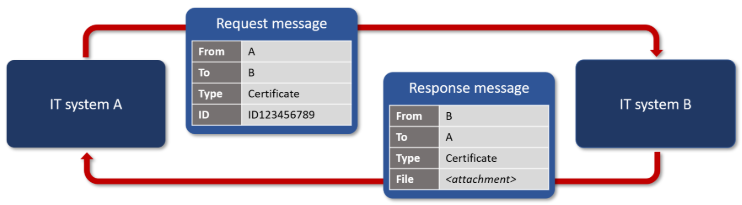
The flow of information between IT systems lies at the core of the digital services used today by citizens, businesses and public administrations. Such exchanges are made possible by ensuring IT systems are interoperable, meaning that they communicate in a common way and share an understanding over exchanged messages and the processing they entail. Interoperability in turn is built on the specifications that formally capture the requirements IT systems must implement. An IT system correctly implementing a specification is said to conform to it, whereas the process to verify this is called conformance testing.
What is the Interoperability Test Bed?
The Interoperability Test Bed is a service offered by the European Commission’s DIGIT to facilitate the conformance testing of IT systems. The Test Bed is itself a software system that can be both downloaded and installed locally, but also reused through a shared online installation operated by DIGIT. It offers an intuitive web user interface and rich integration features that allow administrators to define their project’s overall testing setup as well as users to connect and run tests. All Test Bed software is free to use (also when used as a service), open-source and EUPL-licensed.
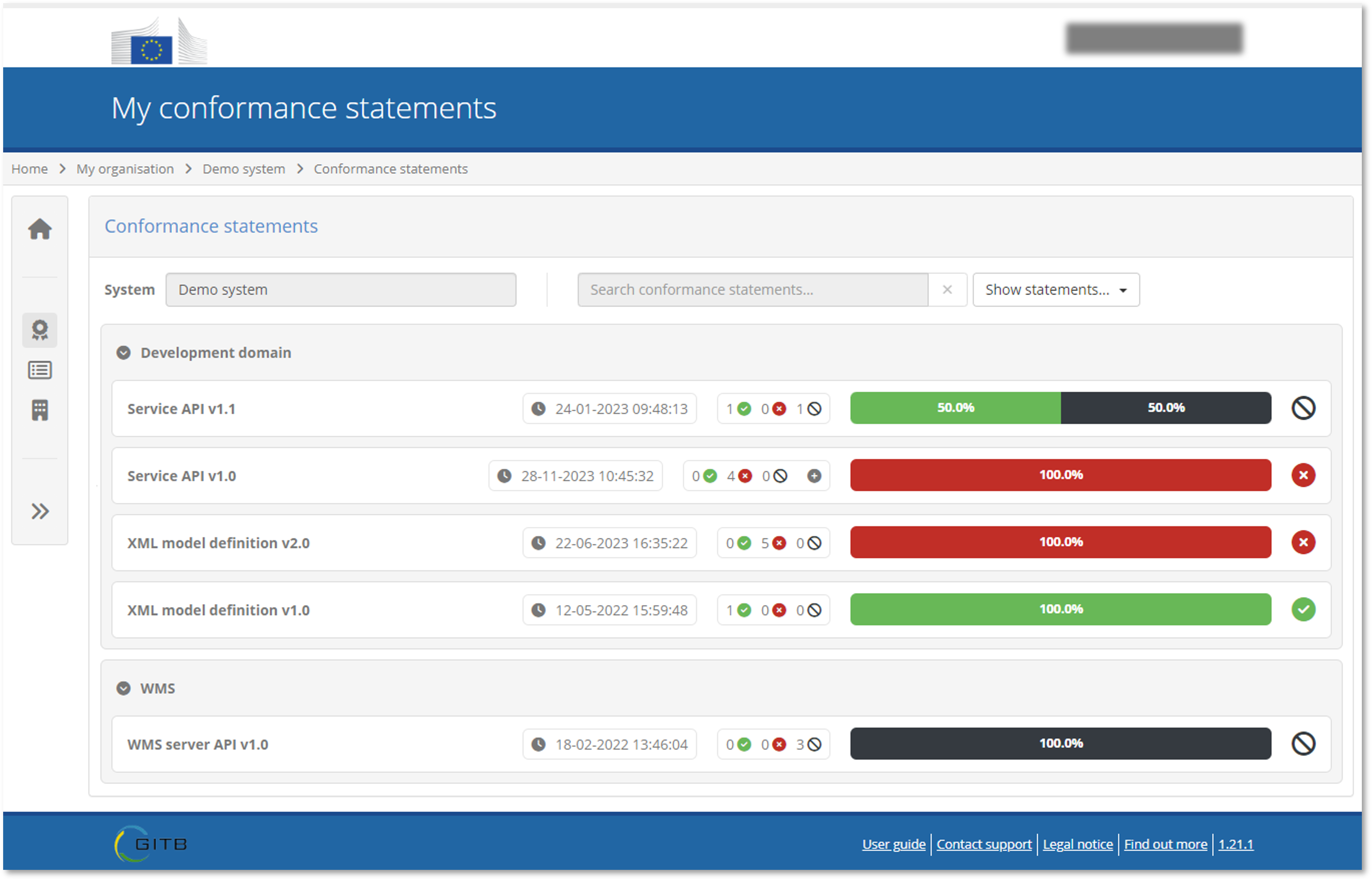
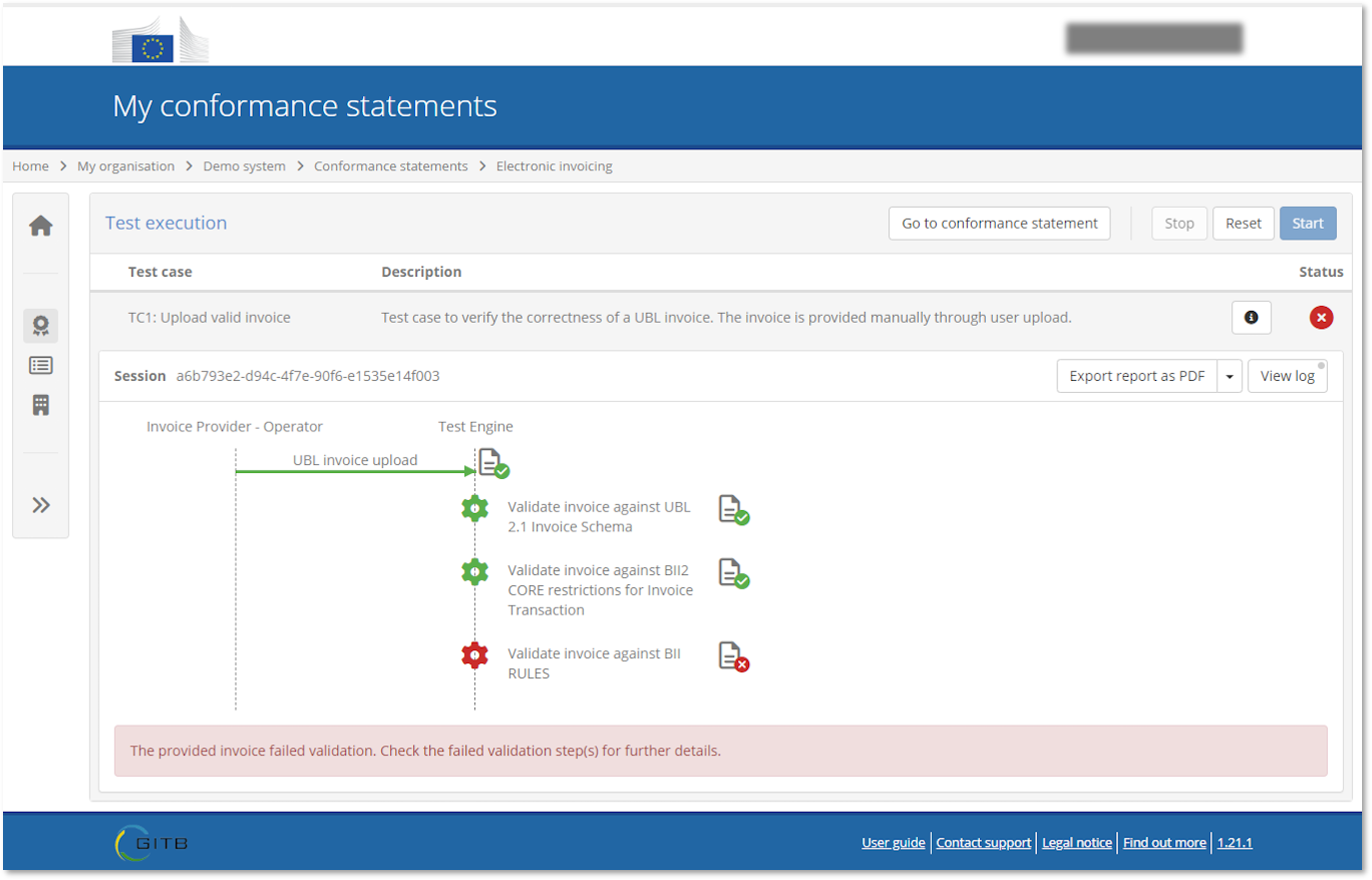
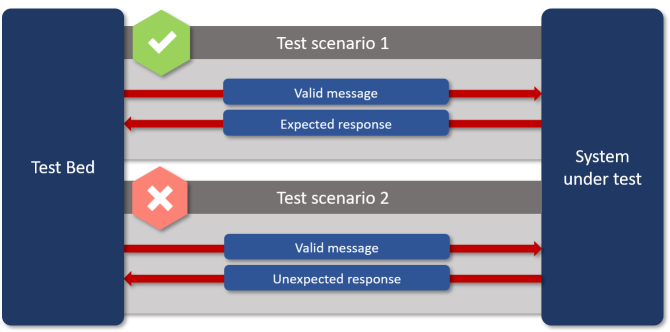
In terms of the testing approach it follows, the Test Bed is typically used to exchange messages with the software systems being tested, supporting both the sending and receiving of messages, validating all steps against the target specification and according to the specific scenario’s expectations. Such scenarios can focus on technical details but can also be defined at business-level, exposing details only when needed to troubleshoot failures. Furthermore, tests can be designed to cover both normal flows but also edge cases and error scenarios that would be otherwise difficult to replicate.
Implementing each test's steps, developers can rely on several built-in test capabilities or refer to external custom services that are integrated via standardised APIs. This allows project teams to cover any testing needs, introducing support for new technologies and domain-specific extensions. Throughout the development process, project teams can count on support from the Test Bed team in all aspects of their conformance testing design and the launch of their testing service.
Validators
Not all projects require a full conformance testing platform. Where the focus is more on data validation, the Test Bed provides reusable validators that can be configured to create standalone validation services. These are web applications supporting validation via web user interface, SOAP and REST APIs, that are used without user registration and without recording inputs and produced reports.
The Test Bed provides ready-to-use validators for XML, RDF, JSON, YAML and CSV, that you can customise and configure with your project's validation artefacts. You can choose to self-host the resulting validator or host on the Test Bed, in the latter case still benefitting from full control and automated service updates. Note that besides being used as standalone apps, validators can also be integrated in your conformance test cases to handle validation steps.

Built for reuse, versatile and trusted by many
The Test Bed is used by Public Administrations, International Organisations, Industry and Academia across the world, for small and large scale use cases alike. Check our selection of highlighted projects using the Test Bed and our published case studies for more detailed accounts.

"Trust in digital health starts with confidence in its foundations. By adopting the Interoperability Test Bed, we’re helping countries build systems that are secure, connected, and ready for global collaboration (…). We’re grateful for our collaboration with the European Commission through the Directorate-General for Informatics (DIGIT), which shows the power of partnership in advancing global digital health."
Dr Alain Labrique, Director, Data, Digital Health, Analytics and AI (DDA)
World Health Organization
"The richness of features, user documentation and onboarding support that the eDelivery team received for free from ITB was excellent to begin with. The ensuing collaboration, the willingness to add additional features and the speed with which they were implemented were impressive (...) we are finally able to focus all our energy on what matters: designing and writing tests. ITB takes care of the rest."
Bogdan Dumitriu, Project Officer, eDelivery Building Block
European Commission, Directorate-General for Digital Services
"Reuse of the Test Bed allowed us to avoid significant effort and focus on core concerns while offering a user-centric and rich conformance testing experience to project staff and the Member States."
Krzysztof Iwanski, Project Officer, Business Registers Interconnection System
European Commission, Directorate-General for Digital Services
"The use of the Test Bed has allowed the CEF eInvoicing Building Block to realise a customised conformance testing service with minimal cost. (...) Savings are roughly estimated to be at least €50,000 and/or 300 person-days."
Caroline Corneau, Project Officer, eInvoicing Building Block
European Commission, Directorate-General for Digital Services
"Thanks to an excellent onboarding experience and a robust, high-performance tool, the Agency, together with EU-RAIL, has rapidly deployed a user-friendly validation solution enabling rail data preparation engineers to efficiently verify, with detailed feedback, the semantic and syntactic conformity of rail infrastructure datasets with the ERA Ontology and its CCSTMS extension, including ETCS engineering rules."
Marina Aguado, Project Officer & Interoperability Coordinator
European Union Agency for Railways
Get started with conformance testing
Follow these steps to set up your conformance testing service:
- Learn: Go through the getting started guide for developers for an overview of all concepts. This is the best starting point before going into more details.
- Install: Install a development Test Bed instance. Make sure you also include the suggested samples to experiment with and get further inspiration.
- Experiment: Start by creating a test suite and then adding messaging exchanges. Consider also the complex test development guide for future use if needed.
Get started with data validation
Follow these steps to set up your data validator:
- Learn: Depending on your target syntax, follow the XML, RDF, JSON, CSV or YAML validation guide to set up a validator for a fictional specification.
- Develop: Set up a local development instance based on the validator's Docker image (for XML, RDF, JSON/YAML or CSV) and complete its configuration.
- Publish: Self-host your validator following our production installation guide or contact the Test Bed team to have it hosted on the Test Bed.
Stay updated
Follow the Test Bed's latest news using the approach that suits you best:
- Via email: Subscribe to the Test Bed solution in the Interoperable Europe Portal and edit your account's subscription settings to receive notifications.
- Via social media: Follow the Interoperable Europe initiative on X and LinkedIn for news on the Test Bed and other interoperability solutions.
- Via GitHub: To be informed of new releases you can also subscribe to release notifications on the Test Bed's GitHub repository.
Get in touch
If you have questions, feedback or are considering reusing the Test Bed, you are invited to send an email to the Test Bed team at DIGIT-ITB@ec.europa.eu. For support, feedback and questions of a more technical nature you are invited to raise a ticket on our solutions' GitHub repositories.
We are continuously looking for feedback to improve the Test Bed and the services we offer to the community. If you have a few minutes to spare we would highly appreciate it if you took the time to complete our feedback survey. Your opinion matters!